Why Your AC Keeps Tripping the Breaker in Atlantic Beach, FL
AC tripping the breaker in Atlantic Beach? Here are the real causes — short cycling, dirty coils, bad capacitor, failing compressor — and what to do next.
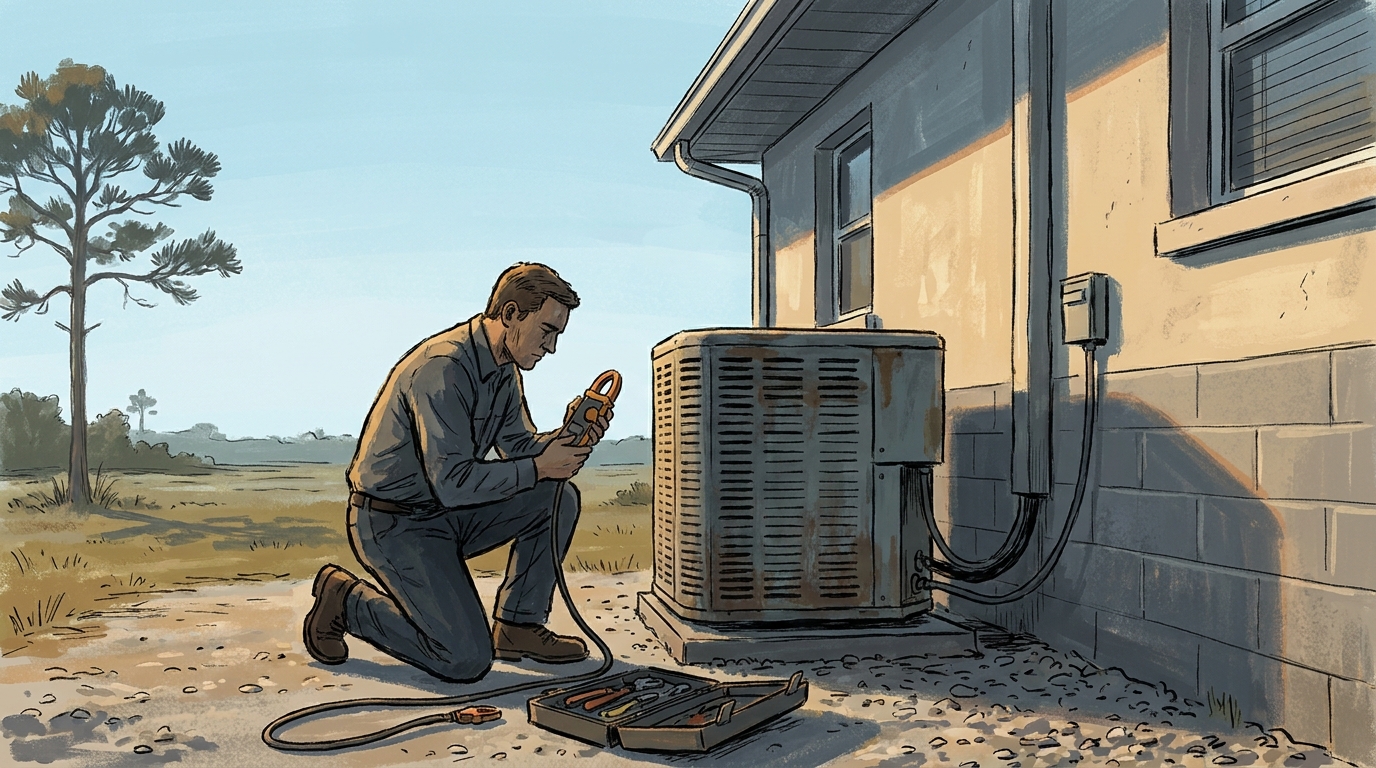
If your air conditioner keeps tripping the circuit breaker in Atlantic Beach, the breaker is doing its job — it's protecting your home from an AC system that is pulling too much current. The most common causes, in order, are a dirty condenser coil, a failing capacitor, a clogged air filter causing a frozen coil, a weak or shorted compressor, or a breaker that itself has aged out. Stop resetting it more than once; repeated resets can damage the compressor and create a fire risk.
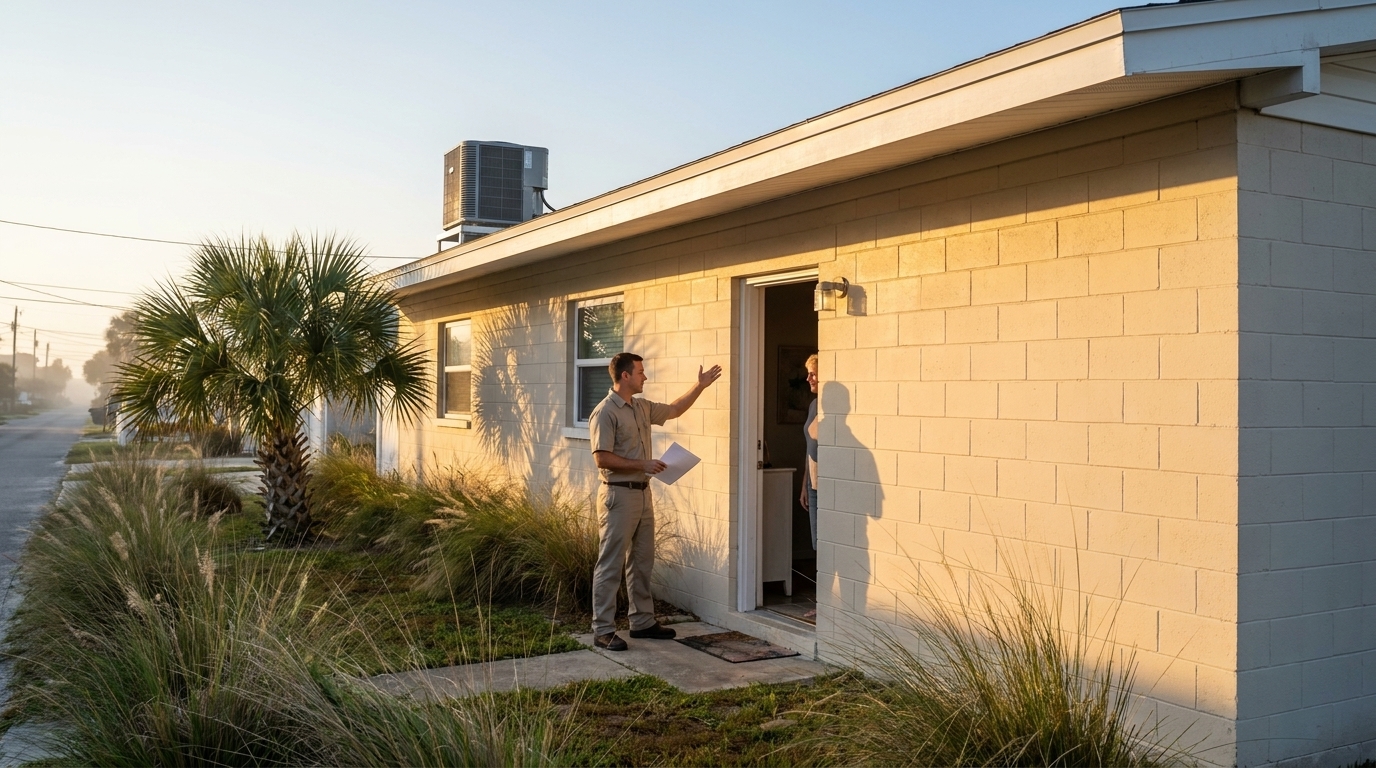
Below is a straight walkthrough of each cause, how to tell which one you have, and when to stop troubleshooting and bring in a licensed HVAC technician. Atlantic Beach's salt air, summer humidity, and older oceanfront housing stock all make certain failures far more likely here than inland — we'll flag those as we go.
Is it safe to keep resetting the breaker?
No. Reset the breaker once. If it trips again within minutes — or trips a second time the same day — leave it off and call an HVAC professional. A breaker that trips repeatedly is responding to a real overcurrent or short, and continuing to reset it stresses the compressor windings, can weld contactor points shut, and in worst cases starts an electrical fire inside the air handler or disconnect box.
What are the most common reasons an AC trips the breaker in Atlantic Beach?
In coastal Duval County homes, the top causes are a salt-corroded or dirty condenser coil, a failed run capacitor, a frozen evaporator coil from restricted airflow, a grounded or shorted compressor, and loose or corroded electrical connections at the disconnect. Breaker age and undersized wiring on older cottages also play a role, especially in homes built before modern service panels were standard.
1. Dirty or salt-corroded condenser coil
Your outdoor unit sheds heat through its coil. When salt spray, dryer lint, and pollen cake the fins, the compressor has to work harder and draws more amps. Over months, that extra draw crosses the breaker's trip threshold on hot afternoons. Homes within a mile of the beach see this failure years earlier than inland homes.
2. Failed or weak run capacitor
The capacitor is a small cylindrical part that gives the compressor and fan motor the jolt they need to start. When it weakens, the compressor tries to start but stalls, pulling locked-rotor amps that spike well above the breaker's rating. A bulging top or a motor that hums without spinning is a strong tell. Capacitors are inexpensive parts but should only be handled by a technician — they store a lethal charge even with power off.
3. Frozen evaporator coil
A clogged filter, closed vents, or low refrigerant can drop airflow across the indoor coil enough to freeze it solid. The compressor then pumps against a block of ice, overheats, and trips the breaker. If you've noticed weak airflow or ice on the copper line outside before the trips started, this is likely your cause. Turn the system to OFF (fan ON) for several hours to thaw before any further diagnosis.
4. Shorted or grounded compressor
This is the serious one. When the compressor's internal windings short to ground, the breaker trips the instant the system calls for cooling. A technician confirms it with a megohmmeter reading between the compressor terminals and the copper line. A grounded compressor almost always means replacement — of the compressor or, more often on older systems, the full outdoor unit.
5. Loose connections or an aged breaker
Humid, salt-laden air corrodes lugs inside the outdoor disconnect and the main panel. Loose connections generate heat, and heat trips breakers. Breakers themselves also weaken with age and repeated tripping — an aging breaker may trip well below its rated amperage. Both are quick fixes for a licensed electrician or HVAC tech working alongside one.
How do you figure out which cause is yours?
Match the symptom pattern. Trips immediately on startup usually means a shorted compressor or seized fan motor. Trips after a short runtime point to a dirty coil, weak capacitor, or low refrigerant. Trips only on the hottest afternoons suggests marginal amperage draw from coil fouling or an aging breaker. Trips with ice visible on the lineset means a frozen evaporator.
| Symptom | Most Likely Cause | DIY or Pro? |
|---|---|---|
| Trips instantly, loud hum | Shorted compressor or seized motor | Pro only |
| Trips after 10-20 minutes running | Dirty coil, weak capacitor, low refrigerant | Pro |
| Trips on hottest days only | Marginal amp draw, aging breaker | Pro |
| Ice on copper line, weak airflow | Frozen evaporator (filter or refrigerant) | Check filter DIY, then Pro |
| Trips during storms | Lightning damage to contactor or board | Pro |
What can you safely check yourself before calling?
Three things, and only three. Replace the air filter if it's visibly dirty. Hose off the outdoor condenser coil gently with the power OFF at the disconnect, spraying from inside out if you can safely remove the top grille. Confirm no vents are closed inside the home. If the breaker still trips after these steps — or if you see rust-stained copper, burnt wiring, or oil around the compressor — stop and call a technician.
When should Atlantic Beach homeowners call a pro?
Call immediately if the breaker trips twice in one day, if you smell burning plastic, if you see scorch marks at the disconnect, or if the system is aging and has never had a professional tune-up. Florida's licensing law requires HVAC repairs involving refrigerant or line-voltage work to be performed by a state-licensed contractor.
King of Home Solutions handles these diagnostics across Atlantic Beach, Neptune Beach, and Jacksonville Beach as part of its regular service area in Duval, Clay, and Saint Johns Counties. A proper diagnostic includes amp-draw readings on the compressor and fan, capacitor microfarad testing, refrigerant pressures, and a continuity check at the breaker and disconnect — not just a visual once-over.
How does maintenance prevent breaker trips in the first place?
Most breaker trips are the end result of problems that were visible months earlier. The King of Home Solutions HVAC Maintenance Plan includes two service visits per year, cleaning of evaporator and condenser coils, flushing of drain lines and drain pans, and checks of wiring, compressor, thermostat, refrigerant pressures, and safety devices — the exact failure points that cause breaker trips. Plan members also receive 15% off repairs, and new customers get 15% off repairs when they enroll.
For Atlantic Beach homes within a few blocks of the ocean, two visits a year is the realistic minimum; the salt load alone justifies it. Spring and fall timing, before summer humidity peaks and after hurricane season, catches corrosion and refrigerant issues before July heat turns them into emergencies.
"Will was great. Arrived as promised, asked several questions about the unit, offered opinions that were well supported with what he saw with my a/c. Pleasant and professional. I'll definitely use King again." — 5★ · Ann, Jun 2026
Frequently asked questions
Can a bad thermostat cause the AC breaker to trip?
Rarely, but yes. A thermostat that short-cycles the system — turning it on and off every few minutes — can cause the compressor to draw locked-rotor amps repeatedly, eventually tripping the breaker. More commonly a bad thermostat causes comfort problems, not breaker trips. If your thermostat is older or you've recently replaced batteries without resolving odd behavior, have it checked alongside the HVAC diagnostic.
Why does my AC only trip the breaker on hot afternoons?
Hot ambient temperatures raise head pressure inside the compressor, which raises amp draw. A system that runs within normal range on a mild day may climb well past the breaker's trip point on a sweltering Atlantic Beach afternoon. If the coil is dirty or the capacitor is weak, that extra draw pushes past the breaker's trip point. The fix is coil cleaning, capacitor replacement, or both — not a bigger breaker.
Should I just replace the breaker with a larger one?
No. The breaker size is matched to the wire gauge feeding your AC and to the equipment's maximum overcurrent protection rating stamped on the data plate. Installing a larger breaker lets excess current flow through wires that can't handle it, creating a fire hazard and voiding equipment warranties. If a breaker is genuinely undersized, the wire and the breaker both need to be upsized by a licensed electrician.
How much does an AC breaker-trip diagnostic cost in Atlantic Beach?
Diagnostic pricing varies by the system, the failure, and whether after-hours service is required. Rather than quote a figure that may not apply to your situation, we recommend contacting King of Home Solutions directly for a quote based on your home and equipment. Simple fixes like a capacitor replacement are among the least expensive repairs; compressor replacement is at the other end of the spectrum.
Can salt air really damage my AC that fast?
Yes. Homes within about a mile of the Atlantic coastline see condenser coils corrode noticeably much sooner than inland homes without regular rinsing. The aluminum fins oxidize, the copper tubing develops pitting, and electrical contacts in the disconnect box corrode. Rinsing the outdoor unit with fresh water every few months — power off — is one of the most effective maintenance steps for beach-adjacent homes.
Is a tripping breaker covered under my AC warranty?
Manufacturer warranties typically cover the failed part — a bad compressor or capacitor — if the system has been maintained per the manufacturer's requirements, usually annual professional service. Labor is often separate and may require a labor warranty or service plan. Keep records of all professional maintenance; without them, most manufacturers deny warranty claims regardless of the actual cause of failure.
Getting it fixed
A repeatedly tripping AC breaker is a diagnostic job, not a reset-and-hope job. The underlying cause ranges from an inexpensive capacitor to a full system replacement, and only amp-draw and electrical testing will tell you which. Atlantic Beach homeowners who want this handled by a licensed local team can reach King of Home Solutions at (904) 865-4663 or https://kingofhomesolutions.com to schedule a diagnostic. The company serves Atlantic Beach as part of its Duval, Clay, and Saint Johns County service area.