Heat Pump Not Heating in Atlantic Beach, FL? Start Here
Heat pump stopped working during a Northeast Florida cold snap? Here's the exact troubleshooting sequence Atlantic Beach homeowners should run first.
If your heat pump stopped working during a cold snap in Atlantic Beach, FL, start with three quick checks before calling for service: confirm the thermostat is set to Heat (not Emergency Heat or Off), replace or clean the air filter, and walk outside to see if the outdoor unit is iced over or completely silent. Nine times out of ten in our coastal climate, the culprit is one of those three things — and two of them you can fix in under five minutes.
Northeast Florida winters are mild on average, but the nights that drop into the 30s and low 40s expose weak heat pumps fast. Coastal salt air, humidity, and the fact that most Atlantic Beach systems are sized for cooling — not heating — mean small issues that hide all summer suddenly become 6 a.m. emergencies. Here's the sequence to run through.
Step 1: Check the thermostat before anything else
Set the thermostat to Heat mode and raise the target temperature at least 3 degrees above the current room temperature. Heat pumps won't kick on for a 1-degree difference — the swing is intentional to prevent short cycling.
If the screen is blank, replace the batteries. If you have a smart thermostat, confirm it's still connected to Wi-Fi and hasn't reverted to a schedule that's holding the house cooler than you think. We see this constantly in second homes and rentals near the beach, where a schedule set for empty-house energy savings never got flipped when the owners returned.
One more thing to check: make sure the mode is Heat, not Emergency Heat (sometimes labeled Aux or EM Heat). Emergency Heat runs your expensive electric backup strips and locks out the heat pump entirely. If it's been running that way for a week, you'll feel it on your JEA bill.
Step 2: Replace the air filter
A clogged filter is the single most common reason a heat pump appears to "stop working." When airflow drops, the indoor coil can freeze, the system trips a safety, and you get cold air — or no air — from the vents.
Pull the filter. If you can't see light through it, replace it. In Atlantic Beach homes with pets or homes that sit closed up during the humid months, filters can clog in six weeks instead of the recommended three months.
Step 3: Look at the outdoor unit
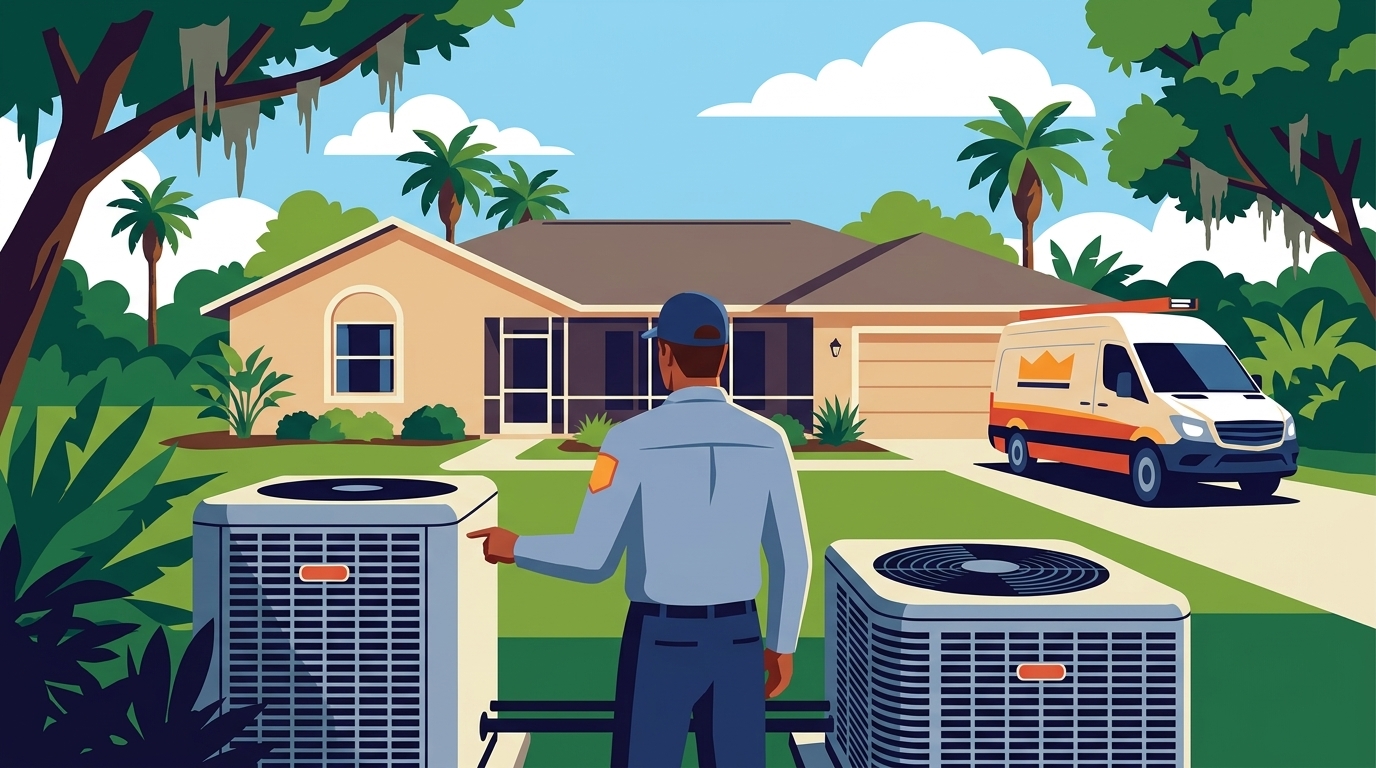
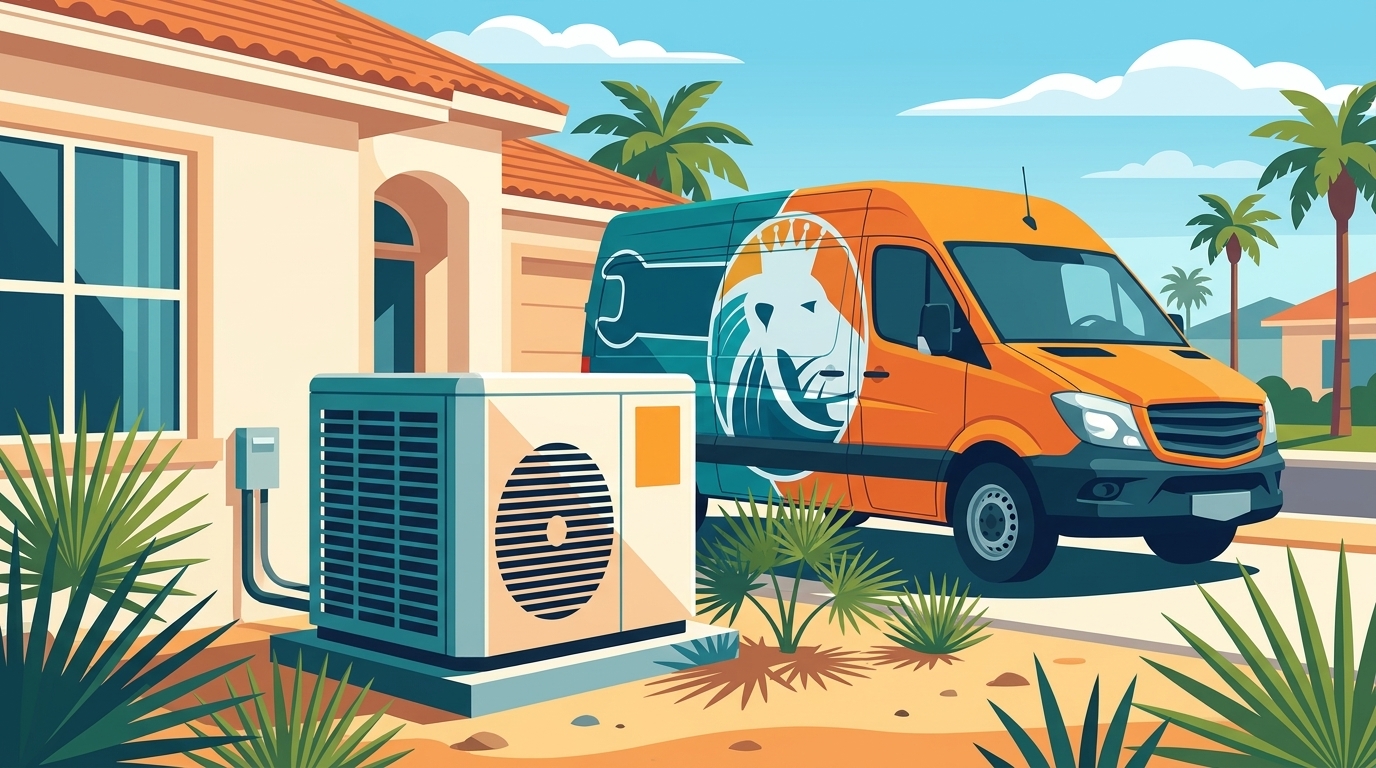
Walk outside to the outdoor unit (the condenser). You're checking three things:
- Is it running? The fan should be spinning and you should hear the compressor. Total silence with the thermostat calling for heat means a power, capacitor, or contactor issue.
- Is it iced over? A light frost on the coils during a cold morning is normal — your heat pump runs defrost cycles automatically. A solid block of ice covering the fan or the entire unit is not normal and points to a stuck defrost control, low refrigerant, or a failed reversing valve.
- Is anything blocking it? Palm fronds, sea grape leaves, and windblown debris are constant issues this close to the ocean. Give the unit two feet of clearance on all sides.
If the unit is heavily iced, switch the thermostat to Off (not Emergency Heat, which will only mask the problem) and let the ice melt naturally. Do not chip it off — you'll bend fins or puncture a refrigerant line.
Step 4: Reset the breaker — once
Find the breakers for both the indoor air handler and the outdoor unit in your electrical panel. Flip each one fully off, wait 60 seconds, then flip back on. Give the system 10 minutes to restart and try a heat call again.
If the breaker trips again immediately, stop. A tripping breaker in cold weather usually means a shorted compressor, a failing capacitor, or a wet contactor — all of which need a licensed technician. Repeatedly resetting a tripping breaker can start a fire.
Why heat pumps struggle in Atlantic Beach's coastal winter
Heat pumps pull heat out of outdoor air. When it's 42°F outside — which happens plenty of mornings from December through February in Duval County — there's less heat to pull, so the system runs longer and the electric auxiliary strips kick in to help.
Two local factors make this worse. First, salt air corrosion: units within a few miles of the Atlantic — which is essentially every home in Atlantic Beach, Neptune Beach, and Jacksonville Beach — corrode faster. Coil fins, contactors, and fan motors give up years earlier than inland units. Second, undersized backup heat: many older beach houses were built with heat pumps sized purely for AC load, with minimal backup heat strips. On a 38°F morning, they simply can't keep up.
If your system is more than 10 years old and lives within sight of the ocean, cold-weather failures often signal end-of-life rather than a single broken part.
When to stop troubleshooting and call for emergency repair
Call a licensed HVAC contractor immediately if you see any of these:
- Burning smell from the vents or the outdoor unit
- Repeated breaker trips
- Ice that returns within an hour of melting
- Loud grinding, screeching, or metallic banging from the outdoor unit
- No response from the system after a thermostat reset and breaker cycle
- Indoor temperature dropping below 60°F with vulnerable family members in the house
Florida requires HVAC repairs on refrigerant systems to be performed by a state-licensed contractor — this isn't a good DIY project once you're past the filter and breaker stage. King of Home Solutions handles emergency heat pump repair across Atlantic Beach, Neptune Beach, Jacksonville Beach, and the surrounding Duval County area, including diagnosis of iced coils, failed reversing valves, and burnt-out auxiliary heat strips.
Frequently asked questions
Why is my heat pump blowing cold air in Atlantic Beach?
Cold air from the vents on a heat call usually means one of four things: the system is in defrost mode (normal, lasts 5–10 minutes), the thermostat is stuck on Cool, the outdoor unit isn't running, or refrigerant is low. If cold air continues for more than 15 minutes, shut the system off and have it looked at before you damage the compressor.
Should I use Emergency Heat during a Florida cold snap?
Only use Emergency Heat if the heat pump itself has failed and you're waiting on a technician. Emergency Heat runs electric resistance strips that cost roughly 2–3 times more per hour than normal heat pump operation. Running it for a full week during a January cold spell can add over a hundred dollars to a JEA bill.
Is a frozen outdoor unit normal in Florida winter?
Light frost that clears within a defrost cycle is normal. A solid ice block on the outdoor unit is not. Persistent icing points to low refrigerant, a failed defrost sensor, or airflow restriction — all of which need professional diagnosis.
How fast can I get emergency heat pump repair in Atlantic Beach?
Response times during a cold snap depend on demand — the first cold morning of the season tends to overwhelm every local HVAC company at once. Calling early in the day, having your system's age and model number ready, and describing exactly what you've already tried (thermostat, filter, breaker, ice check) all help a dispatcher prioritize and prepare.
The bottom line
Most heat pump failures in Atlantic Beach come down to thermostat settings, a dirty filter, a frozen outdoor unit, or an aging system worn down by salt air. Work through the four-step check above before you call anyone — you'll either solve it in ten minutes or give a technician exactly the information they need to arrive prepared.
Homeowners in Atlantic Beach, FL who'd rather have this diagnosed and repaired professionally can reach King of Home Solutions at kingofhomesolutions.com. The company services heat pumps throughout the Beaches communities and carries a 4.9-star Google rating, with reviewers regularly citing on-time arrival, clear communication, and fair pricing — useful qualities when you're standing in a cold living room waiting for someone to show up.